Systems Mapping for Arctic Ocean Conservation
Co-designing protection with the communities who know the Arctic best
The Arctic is warming four times faster than the rest of the planet, yet the Indigenous and local communities who have stewarded it for millennia remain on the margins of the systems built to protect it. This research asks how systems mapping, used as a design management methodology, can change that: how it can help co-design Arctic Ocean conservation strategies that place Indigenous knowledge and priorities at the centre of global decision-making, rather than treating communities as people to consult after the fact. Set against a pivotal moment, the High Seas Treaty entering into force, new pan-Arctic protection frameworks, and the first Indigenous-led conservation agreements at scale, it argues that the architecture to protect the Arctic now exists; what is missing is a shared method for designing it together.
What the paper explores
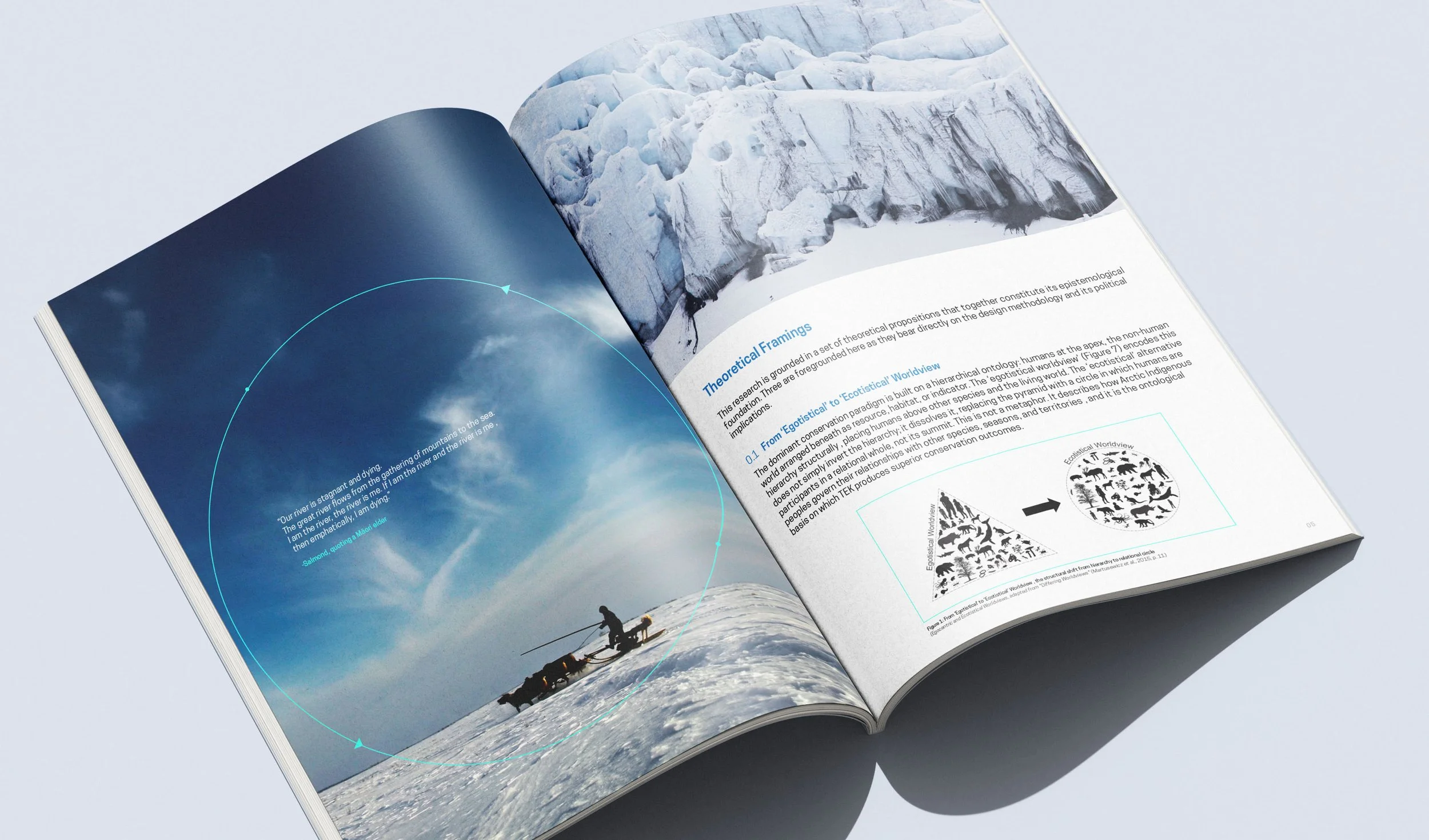
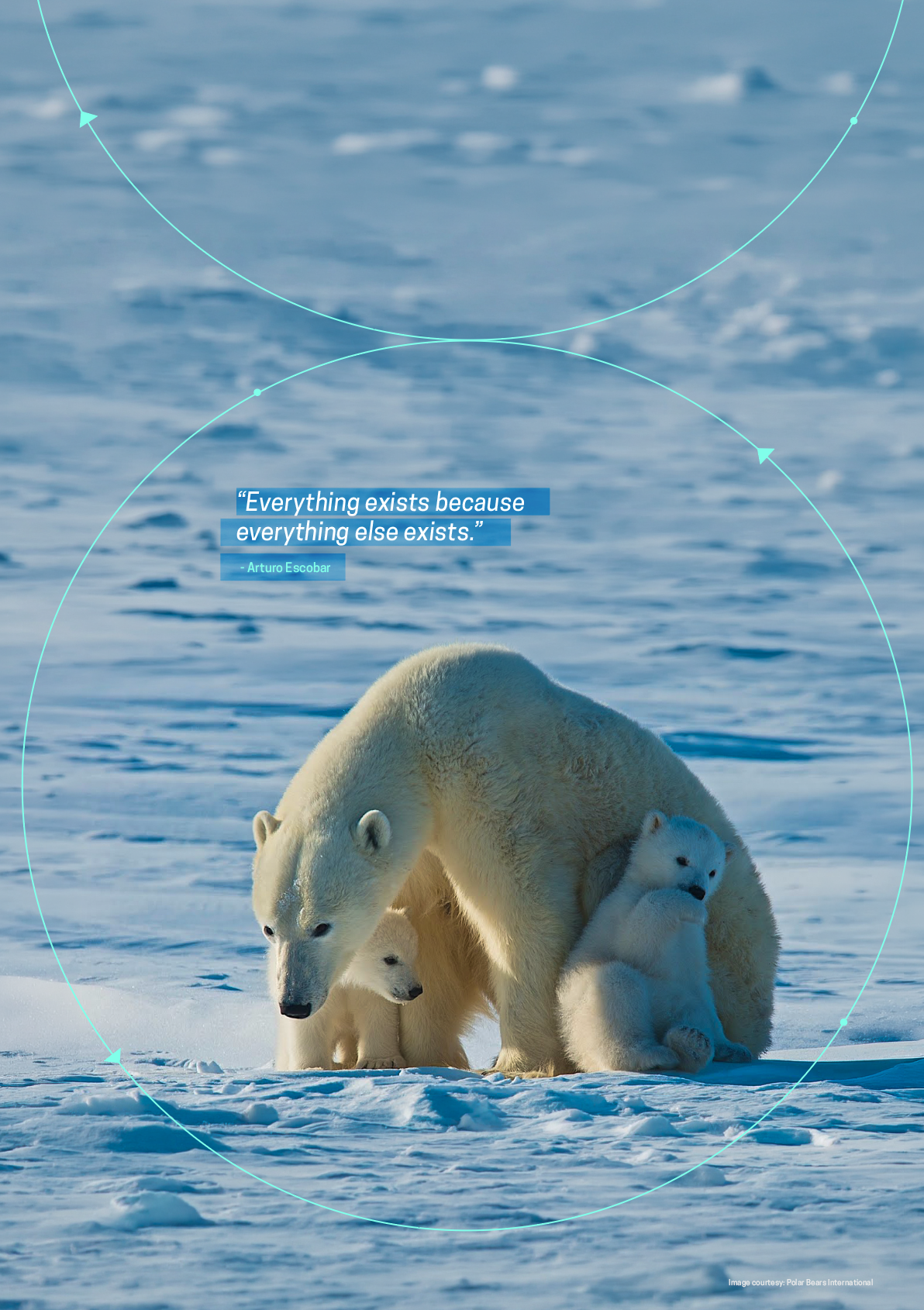
From an "egotistical" to an "ecotistical" worldview — moving conservation away from a human-at-the-apex hierarchy toward a relational model in which people are part of the living whole, and why this is a design specification rather than a metaphor.
Why excluding Traditional Ecological Knowledge is an analytical failure, not only an ethical one — Indigenous peoples make up roughly 5% of the world's population yet steward over 80% of its remaining biodiversity.
The difference between rights-holders and stakeholders — grounded in UNDRIP and Free, Prior and Informed Consent, and what it means for who sets the terms of a co-design process, not just who sits at the table.
A power analysis of Arctic governance — the gap between formal authority (held by states) and knowledge authority (held by communities), and the limits of the Arctic Council's "Permanent Participant" model.
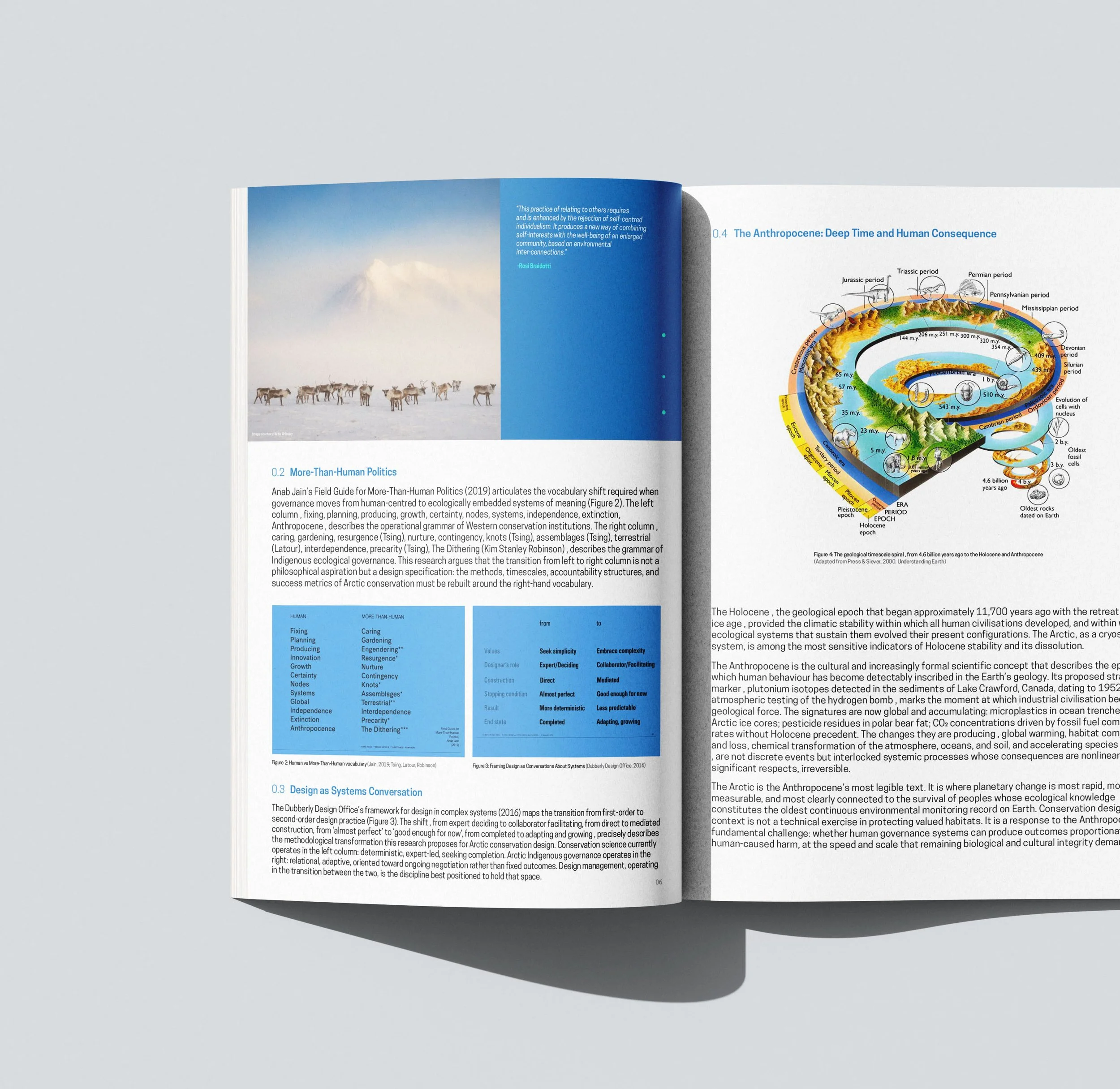
Foresight and systems tools applied to a live governance moment — Causal Layered Analysis, the Double Diamond, Transition Design and horizon scanning, mapped onto the BBNJ Treaty, WWF's ArcNet priority areas and the Inuit-led SINAA agreement, building toward a design-leadership framework in which systems mapping works as both diagnostic and participatory tool.
Systems Design - Stakeholder Mapping - Arctic Ocean Conservation - Indigenous Knowledge (TEK)